

Restoring wood furniture is far more than sanding down old surfaces and applying a fresh coat of stain—especially when the piece holds deep personal or historical value. Whether it’s a dining table that has hosted family gatherings for generations or an antique dresser carefully rescued from decades in storage, true restoration means delicately revealing the original craftsmanship hidden beneath layers of wear, dents, scratches, and faded finishes.
At Renowned Finishing in Airdrie, Alberta, we have spent over 12 years dedicated to bringing cherished wood furniture back to life for homeowners, interior designers, renovators, and property investors across Airdrie, Calgary, and surrounding areas. One fundamental lesson our extensive experience has taught us: authentic restoring wood furniture is equal parts precise science, patient craftsmanship, and profound respect for the material and its story.
This is not a simple weekend DIY task. Amateur attempts with store-bought strippers, brushes, or spray cans frequently result in blotchy finishes, visible brush marks, uneven sheen, accelerated cracking in Alberta’s dry climate, or irreversible damage to irreplaceable patina and grain detail.
Professional wood furniture restoration is a deliberate, multi-stage process that seamlessly combines:
Every step is designed to honor what makes each piece unique—its species of wood, construction method, era-specific joinery, and personal history—while ensuring it remains beautiful and functional for decades to come.
Here’s exactly what happens during expert restoring wood furniture at Renowned Finishing in Airdrie, and why only a trained restoration specialist can deliver results that are both historically respectful and visually stunning.
Before a single tool touches the surface, we study the piece.
This step sets the direction for everything that follows. You can’t restore what you don’t understand, and after decades in this craft, we can often tell a piece’s history just by the way it’s worn.
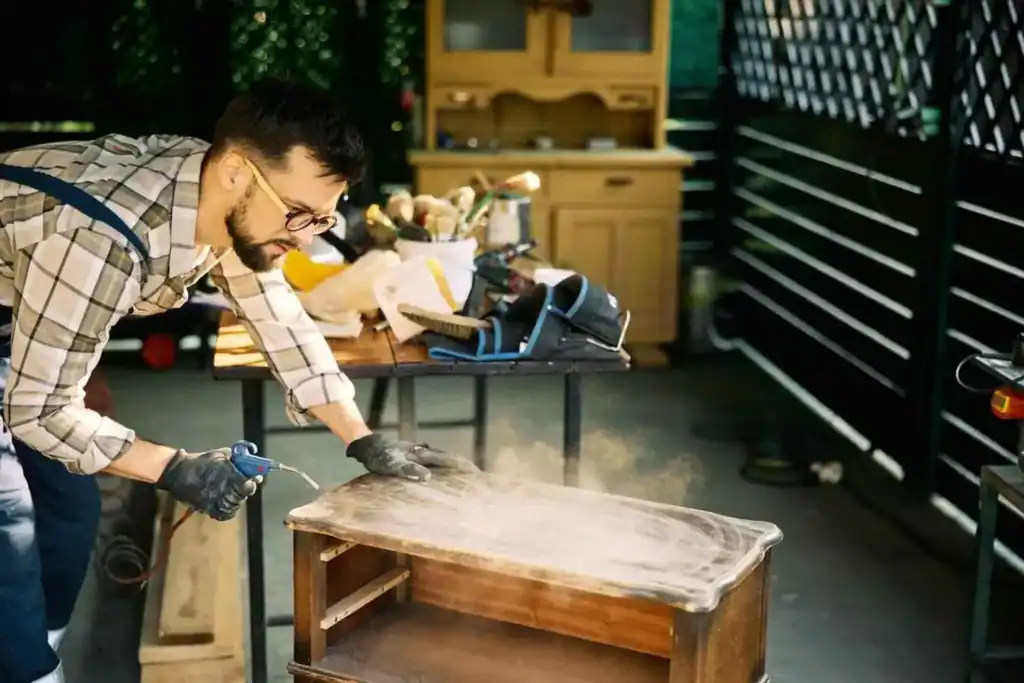
Every refinisher has a love-hate relationship with this step. Stripping is messy, slow, and crucial.
Older finishes, waxes, and oils can obscure the grain, but rushing to remove them risks damaging the wood beneath. We use low-odor, professional-grade strippers or gentle solvent cleaning depending on what’s on the surface.
In some cases, a piece doesn’t need full stripping; a deep clean and reconditioning can revive the finish without losing its patina. Knowing when to stop is where experience makes all the difference.
A good restoration never hides flaws; it fixes them.
This stage often involves:
We also look for hidden damage, old nails, mismatched filler, or moisture staining that’s migrated under the finish. Every repair is done with materials compatible with the original wood, so it expands, contracts, and ages naturally.
This is where craftsmanship and restraint come in: the goal is to strengthen, not reinvent.
This is where artistry meets chemistry.
Different woods, even boards from the same tree, absorb stain uniquely. That’s why we custom-mix and test stains on identical wood samples until we find the perfect tone.
Lighting, age, and finish type all influence color. A walnut table restored under bright shop lights will look completely different in your home’s soft evening glow. We always check color samples under multiple lighting conditions, ensuring what you see is what you’ll live with.
The goal isn’t to erase the piece’s story; it’s to bring out its best version.
A great finish doesn’t just make furniture shine, it protects it for decades.
Depending on the project, we might use:
Every coat is applied, cured, and sanded between layers for consistency. The final sheen is polished to match your taste, whether that’s a classic antique glow or a sleek, contemporary feel.
Restoring wood furniture doesn’t always mean returning a piece to its exact original appearance. In many cases, clients in Airdrie, Calgary, and across Alberta want to breathe fresh life into heirlooms by modernizing the look—lightening overly dark walnut or oak, shifting to contemporary two-tone designs, introducing softer neutral or matte finishes, or creating deliberate contrast that aligns with 2025–2026 interior trends.
Even when restoring wood furniture evolves into thoughtful reinvention, the core principle at Renowned Finishing remains unchanged: we never erase the piece’s original craftsmanship or intent. Every decision—whether preserving authentic grain patterns, retaining period-appropriate joinery details, or selectively updating tone—is guided by deep respect for what the furniture was built to be.
We often tell clients: A skilled refinisher doesn’t merely refinish wood—they restore the original intent while thoughtfully adapting it for today’s homes.
This balanced approach delivers real emotional and visual value:
Examples of respectful reinvention we frequently execute in Airdrie:
By combining expert wood furniture restoration techniques with sensitive modern updates, we ensure the finished piece feels both timeless and perfectly suited to your current lifestyle—delivering far more than a cosmetic refresh.
Ready to discuss how we can respectfully reinvent your cherished wood furniture while preserving its soul? Contact Renowned Finishing in Airdrie for a free consultation. We serve Calgary and surrounding areas with convenient doorstep pickup and delivery.
Wood restoration might look simple on social media, but the truth is, mistakes are easy to make and hard to undo. Over-stripping, uneven sanding, or the wrong finish can permanently alter or weaken the piece.
At Renowned Finishing, we approach each restoration with the same philosophy:
Whether it’s a mid-century dresser or an heirloom dining set, our workshop in Airdrie is equipped for everything from detailed color matching to complete refinishing.
We’re not here to erase time, we’re here to honor it.
Question 1. How long does furniture restoration take?
Ans: Most projects take between one and three weeks, depending on complexity, repairs, and drying times between finishes.
Question 2. Can any piece of furniture be restored?
Ans: Almost. Some particleboard or heavily damaged pieces may not justify full restoration, but solid wood furniture can almost always be revived.
Question 3. Will the furniture look brand new afterward?
Ans: Not always, and that’s often the point. The best restorations maintain a piece’s history while renewing its beauty and strength.
Question 4. How do I know if my furniture is worth restoring?
Ans: If it has sentimental value, solid construction, or unique craftsmanship, it’s worth saving. A quick evaluation from a refinishing expert can confirm its potential.



Don’t replace your beloved pieces, restore them with care and craftsmanship.