
Wood Furniture Repair: What’s Actually Possible and When It’s Worth It.
Wood furniture is built to last, but time, use, and accidents eventually leave their mark. At Renowned Finishing in Airdrie,

The difference between a nail and a screw is important to know in professional furniture refinishing and restoration. This difference can determine whether a piece lasts another 30 years.
Understanding the difference between a nail and a screw helps you understand certain construction methods.
The main difference between a nail and a screw is their holding power, flexibility, and application.
A nail is typically smooth (or slightly ridged), which is driven into wood by extra force. It relies on friction and compression between the nail shaft and wood fibers. Nails are excellent at handling shear strength, which means sideways pressure.
A screw, on the other hand, has threaded ridges that cut into the wood. It is rotated into place, creating a mechanical grip. Screws provide superior pull-out resistance and clamping strength.
Here are the major differences in practical terms:
| Feature | Nail | Screw |
| Installation Method | Driven by impact | Rotated into material |
| Holding Power | Strong in shear | Strong in pull-out resistance |
| Removal | Difficult, may damage wood | Easier, controlled removal |
| Best For | Framing, flexible joints | Structural joints, repairs |
| Long-Term Adjustability | Limited | High |
This technical difference between nail and screw directly affects how furniture ages.
There is no universal “better.” The right fastener depends on the stress load, wood type, and purpose of the joint.
In furniture restoration, screws are generally preferred for structural repairs because they:
This doesn’t mean nails are useless; nails still serve a purpose. In older furniture, nails were often used because they allowed slight flexibility as wood expanded and contracted with seasonal humidity changes.
So which one is better? The honest answer depends on the difference between nail and screw: screws offer precision and strength, while nails offer speed and flexibility. So whichever result you want, you can choose screws or nails depending on it.
This is one of the most common questions online. The short answer is: sometimes, but not always.
You can replace nails with screws to improve holding power, but improper substitution may cause wood splitting, over-tightening, or visible surface damage. In antique or older furniture, it is better to maintain the original structural form.
At Renowned Finishing, we assess:
The difference between nail and screw becomes especially important when preserving original craftsmanship.
Choosing correctly requires understanding load forces and wood movement. Below is a simplified professional perspective.
| Situation | Why Nail Works |
| Trim attachment | Allows minor movement without cracking |
| Lightweight backing panels | Fast installation with minimal splitting |
| Areas requiring flexibility | Handles vibration and seasonal shifts |
| Non-load-bearing joints | Cost-effective and efficient |
| Situation | Why Screw Works |
| Structural frame repairs | Strong clamping strength |
| Loose joints | Superior pull resistance |
| High-stress areas (legs, supports) | Prevents separation |
| Long-term restoration | Adjustable and removable |
Understanding this usage clarifies the practical difference between nail and screw in restoration settings.
During refinishing, we often uncover hidden fasteners beneath layers of stain or paint. Sometimes we find nails loosening after decades of use. Other times, improperly installed screws have cracked panels.
The correct evaluation of the difference between nail and screw allows us to reinforce furniture discreetly while maintaining original design integrity.
Fastener selection influences:
The difference between a nail and a screw is that one is driven by force, and the other cuts through the wood. Where nails are strong in shear, screws are strong in pull-out resistance. Both has its own perks.
At Renowned Finishing in Airdrie, we evaluate the internal construction of every piece. Choosing the correct fastening method ensures your restored furniture remains stable, durable, and visually refined for years to come.
If you’re considering professional furniture refinishing or structural repair, contact Renowned Finishing today. We combine technical expertise with craftsmanship precision to protect the integrity of your furniture down to the smallest fastener.
Ans: The primary difference between a nail and a screw lies in holding mechanics. Nails rely on friction and perform well under shear force, while screws use threads for superior pull-out resistance.
Ans: Screws generally provide stronger clamping strength, but nails often perform better under sideways stress.
Ans: Sometimes, but a professional evaluation is recommended to avoid splitting or structural imbalance.
Ans: Nails were faster to install and allowed slight flexibility for wood movement.
Ans: Screws typically offer longer-lasting, tight joints, but proper installation determines longevity.
Wood furniture is built to last, but time, use, and accidents eventually leave their mark. At Renowned Finishing in Airdrie,
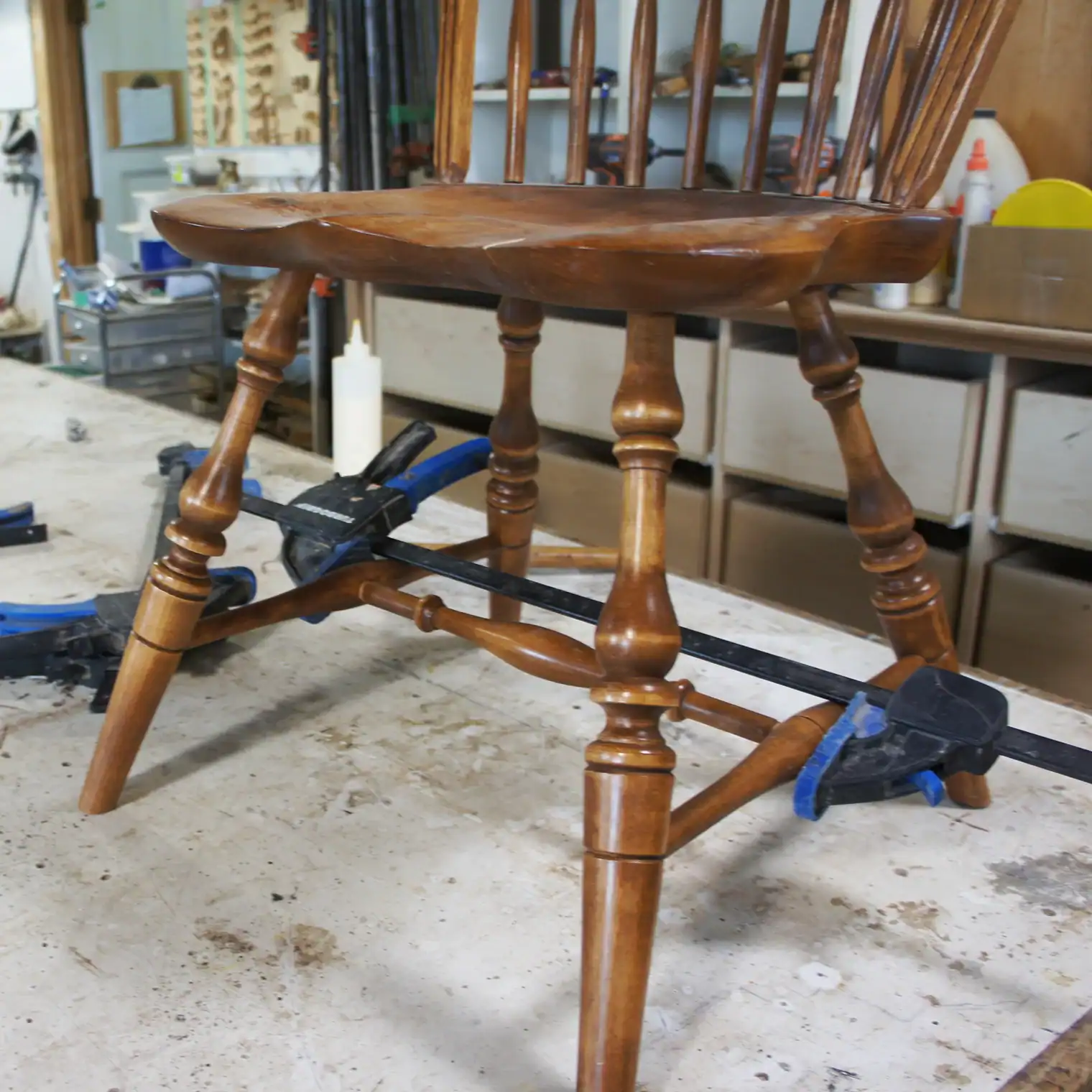
Antique chairs carry more than wood and craftsmanship; they carry memories, history, and the unique character of another era. Whether

Don’t replace your beloved pieces, restore them with care and craftsmanship.