
Wood Furniture Repair: What’s Actually Possible and When It’s Worth It.
Wood furniture is built to last, but time, use, and accidents eventually leave their mark. At Renowned Finishing in Airdrie,

Vintage furniture holds a special place in interior design. Beyond their practical use, vintage chairs represent craftsmanship, historical design influences, and timeless beauty. Whether placed in a dining room, living room, or a reading corner, these chairs often become the most distinctive pieces in a home.
Understanding the types of vintage chairs helps homeowners, collectors, and interior enthusiasts appreciate their design origin and maintain them properly. When properly restored and refinished, these chairs can continue serving households for many decades.
In this guide, we explore the most popular types of vintage chairs and how professional refinishing can bring them back to life.
A chair is usually thought of as being vintage as it is aged between 20 and 100 years, and has the visual style of a specific time period. The old chairs were mostly constructed of solid wood that had been hand-carved and built with strong joinery methods, as compared to the contemporary mass-produced furniture.
Because of their durable construction, many vintage chairs can be refinished or restored instead of being discarded, and they are valuable in terms of their beauty and use.
Vintage chairs come in many styles, each reflecting a different era of design and craftsmanship
1. Victorian Chairs
One of the most familiar vintage designs is the Victorian chair. These chairs come in a variety of shapes, sizes, and styles, commonly carved, with curved legs, and ornate upholstery.
The Victorian chairs were designed to showcase luxury and craftsmanship. They are still trendy in classic interiors today, and in the event of proper renovation, they can be the statement pieces.
The wingback chairs were invented in the 17th century and were very popular during the Victorian and colonial years. They were initially meant to help in catching fireplace heat and also protect occupants against drafts.
Old wingback chairs are usually subjected to upholstery repair or refurbishment of wooden frames in order to preserve the original look.
Ladder-back chairs are known for their simple and practical design. Its backrest is made out of horizontal slats, which look like a ladder; hence the name of the chair.
These chairs are commonly found in farmhouse or rustic interiors.
Ladder-back chairs are great candidates for refinishing and restoration after being redesigned into a sturdy design.
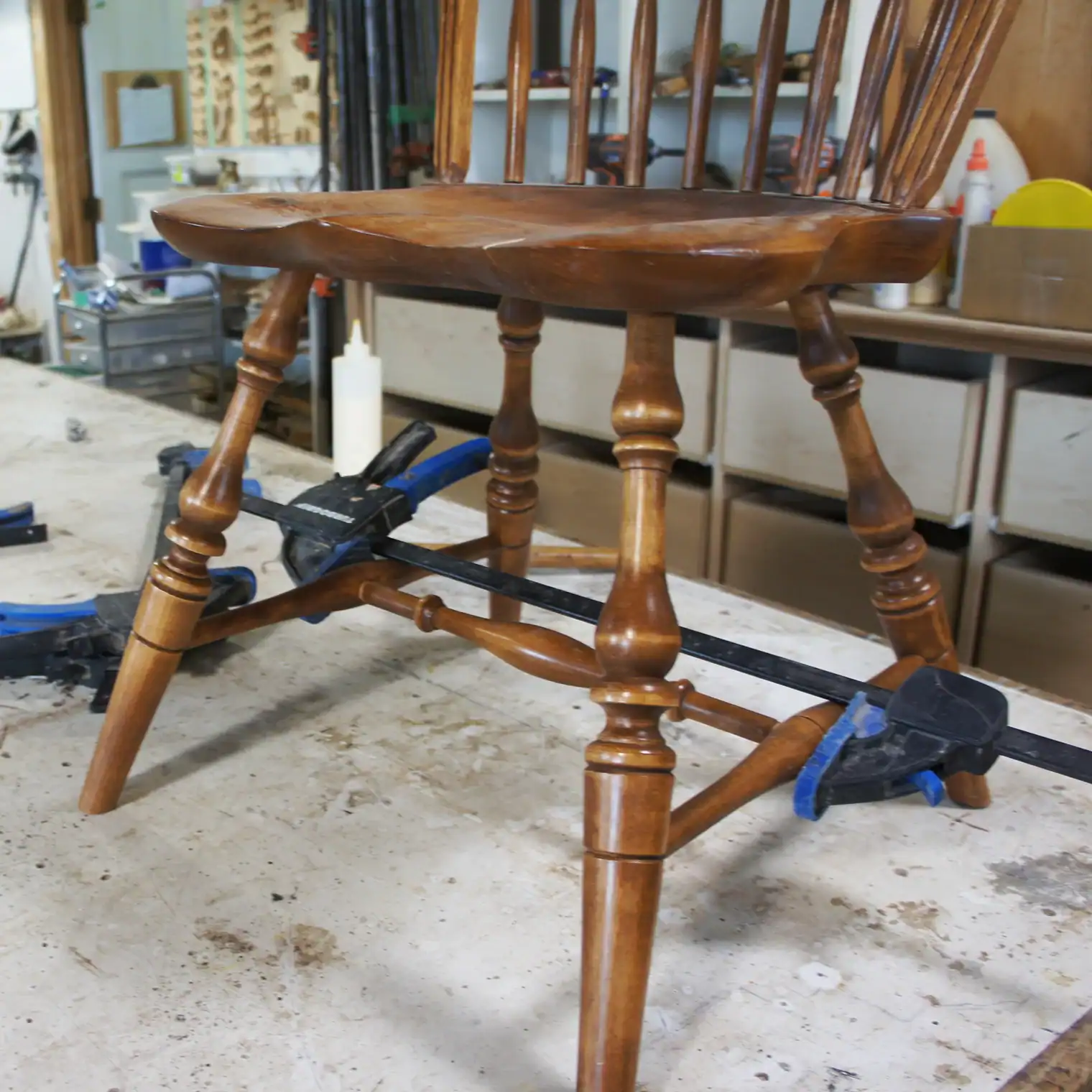
Windsor chairs were first introduced in England during the early 18th century and became popular in North America. The unique features of their design are a solid wooden seat with slender spindle backs.
Vintage Windsor chairs may wear on the surface with time, though this can be repaired through refinishing to preserve their original beauty and to repair the wood.
Bentwood chairs were popular in the late 19th century, and they are known for their use of curved wooden frames, which are created using steam-bending techniques.
These were popular chairs used widely in cafes and dining areas as they were durable and of an elegant simplicity.
Mid-century modern chairs are a representation of the design movement of the 40s to 60s. They are considered clean and functional and are still very sought-after in modern interiors.
A lot of mid-century vintage chairs need to be refinished or repaired slightly to achieve the smooth look.
Why You Should Restore Vintage Chairs.
The vintage chairs are usually sentimental and historical. Restoration of such pieces has a number of benefits as opposed to disposing of them.
A lot of old chairs were made under the old woodworking styles that are not common in today’s mass production. It is restoration that is used to conserve this craftsmanship.
The recycling of existing furniture also lowers wastage and does not necessitate the production of new furniture. This puts restoration in a better environmental responsibility.
It is not cheap to replace old or quality wooden chairs. Professional refinishing is cheaper, but preserves the original structure of the chair.
Old chairs are a source of color to a room. A re-done chair can be easily made the center of a living room or a dining room.
With time, well-designed pieces of furniture will also start to wear out. The identification of these indicators assists in the identification of when it should be restored.
This can be solved by dealing with the problems at an early stage to avoid additional destruction and to maintain the value of the chair.
There are various processes that are involved in the restoration of professional furniture to make sure that the chair is made safe and effective.
The restoration will start with an inspection of the structure of the chair, its state of wood, and its finish.
Worn-out finishes, dirt, and remnants are taken off well. Refinishing requires the use of sanding to prepare the surface of the wood.
Damaged parts, loose joints, or cracks are repaired in order to make them stable.
The chair can be painted to give it a fresh touch or stained to add more beauty to the wood grain, depending on the desired appearance.
Lacquer or polyurethane is used to treat it with a protective layer to make it durable and have a long life.
This process restores the chair while preserving its original design features.
It takes skills, tools, and understanding of finishes on wood to restore old chairs. Professional refinishing experts can help to preserve the original structure and add to the look.
Experienced craftsmen can:
These techniques ensure that vintage chairs remain functional and beautiful for many more years.
Bringing Vintage Chairs Back to Life
Vintage chairs have a decade to tell, and when properly maintained, they can even be used by other generations to come. It can be a Victorian accent chair, a Windsor dining chair, or a mid-century modern object, and restoration can bring back its beauty and worth.
When your old furniture has worn out, it can also be refinished by professionals who will restore its original nature and make it durable. The art and artisanship have preserved these timeless works so that they can stay a beautiful part of your house.
Vintage furniture is not just a form of decoration; it is a symbol of the past, artistry, and timeless architecture. Knowing the kind of vintage chairs and investing in the correct restoration, the homeowners can save these marvelous items and use them in the long run.
Ans: Some of the most popular types of vintage chairs include Victorian chairs, wingback chairs, Windsor chairs, ladder back chairs, bentwood chairs, and mid-century modern chairs. Each style reflects a specific design period and is known for its unique craftsmanship, materials, and construction techniques.
Ans: A vintage chair can usually be identified by its age, craftsmanship, materials, and design features. Many vintage chairs are made from solid hardwood and include distinctive elements such as carved details, traditional joinery, or historically recognised design styles. Examining labels, construction methods, and wear patterns can also help determine authenticity.
Ans: Yes, restoring vintage chairs is often worthwhile. Many older chairs were built with durable hardwood and strong joinery, making them ideal candidates for refinishing and repair. Professional restoration can preserve the chair’s character, extend its lifespan, and maintain its aesthetic value.
Ans: The time required to refinish a vintage chair depends on its condition, design complexity, and the type of finish being applied. In most cases, professional refinishing may take several days to a couple of weeks, especially if structural repairs or detailed finishing work are required.
Ans: The main difference lies in age. Antique chairs are typically over 100 years old, while vintage chairs are usually between 20 and 100 years old. Both can hold historical and aesthetic value, but vintage furniture often reflects more recent design movements such as mid-century modern styles.
Wood furniture is built to last, but time, use, and accidents eventually leave their mark. At Renowned Finishing in Airdrie,
Antique chairs carry more than wood and craftsmanship; they carry memories, history, and the unique character of another era. Whether

Don’t replace your beloved pieces, restore them with care and craftsmanship.